Hiroshima and Kure, A Food Trip That Went Much Deeper Than Expected
I, my husband and our baby recently traveled to Hiroshima and Kure, and once again, Japan reminded me how much there still is to discover.
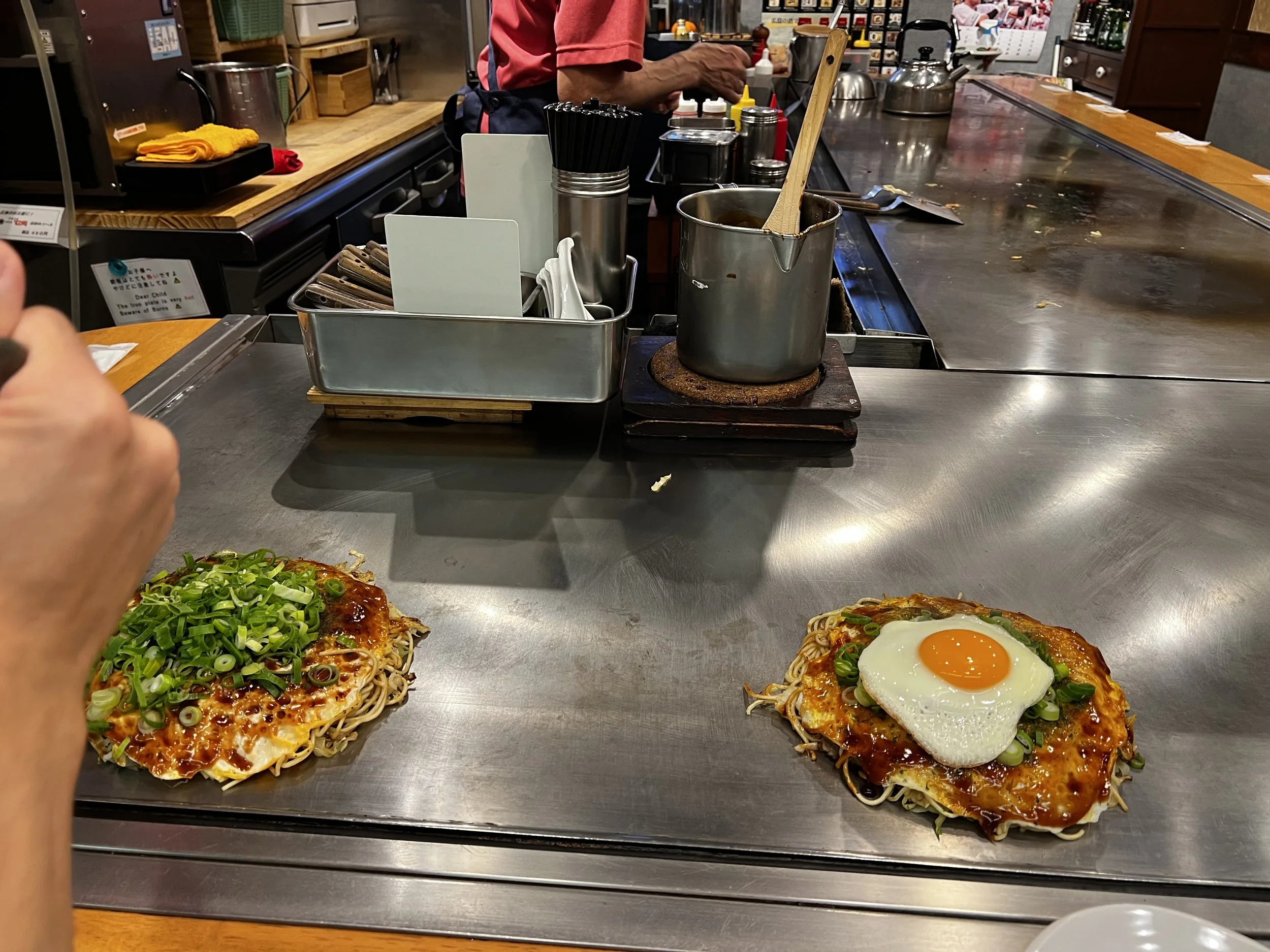
Hiroshima is famous for oysters and okonomiyaki, and for good reason. Oyster farming is big there, and the local okonomiyaki style is very much its own thing. Layers instead of mixing, noodles included, and every shop proudly serving its own version.
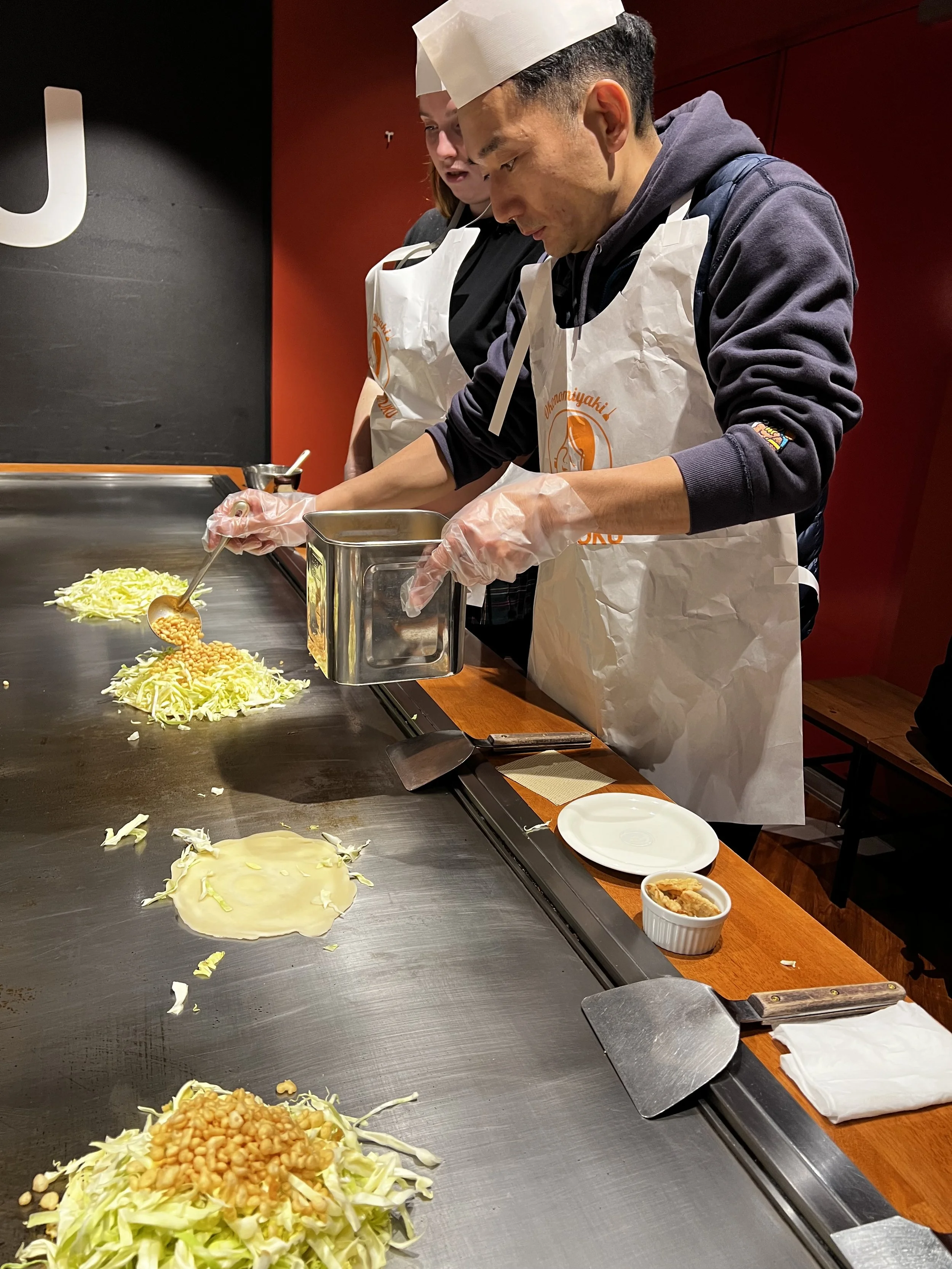
Because I run cooking classes for international guests, I joined an okonomiyaki cooking experience run by a major Hiroshima sauce company. It was designed entirely for foreigners. We were the only Japanese participant, plus one other foreign guest, which made us look very suspicious. Why are you here. Who are you working for. Light spy vibes.
Jokes aside, it was incredibly interesting to see how they teach, what questions guest ask, and how the experience is structured. So much to learn from watching other people teach.
We also went to Okonomimura, a slightly chaotic and shady building packed with okonomiyaki shops. From the outside it looks rough. Inside it is loud, smoky, and full of personality. We picked one corner and ate there, surrounded by locals and tourists and the sound of sizzling plates.
What really stood out to me is that the biggest difference between okonomiyaki shops is not just the cooking style. Every shop has its own original sauce. My guess is that many of them work with Otafuku as a base, but each one clearly tweaks it. The flavors are different. The identity is different. That part was fascinating.
Honestly, though, the most memorable food in Hiroshima was not okonomiyaki. It was a tiny sandwich shop called Red Hedgehog. Only about eight seats. Open from seven in the morning to one in the afternoon. Every detail was thoughtful. Creative but precise. This is the kind of place you travel for.
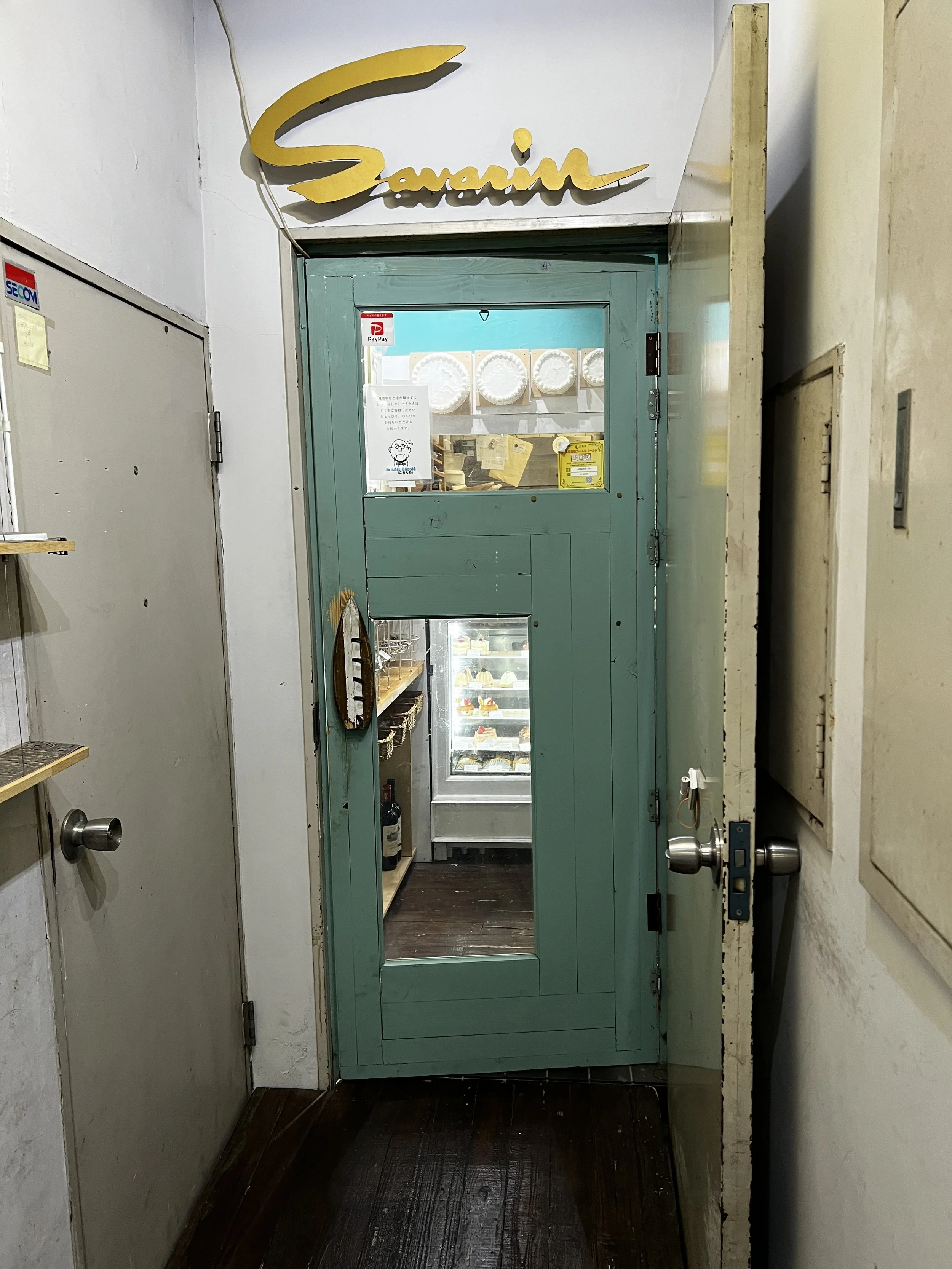
There was also a very small cake shop called Savarin with only three seats, famous for its savarin. Simple, perfect, unforgettable.
Kure was a completely different experience. It is a naval port town, known for shipbuilding and submarines. You can even go inside one. The city has the feeling of a place that once flourished, and that history is still visible.
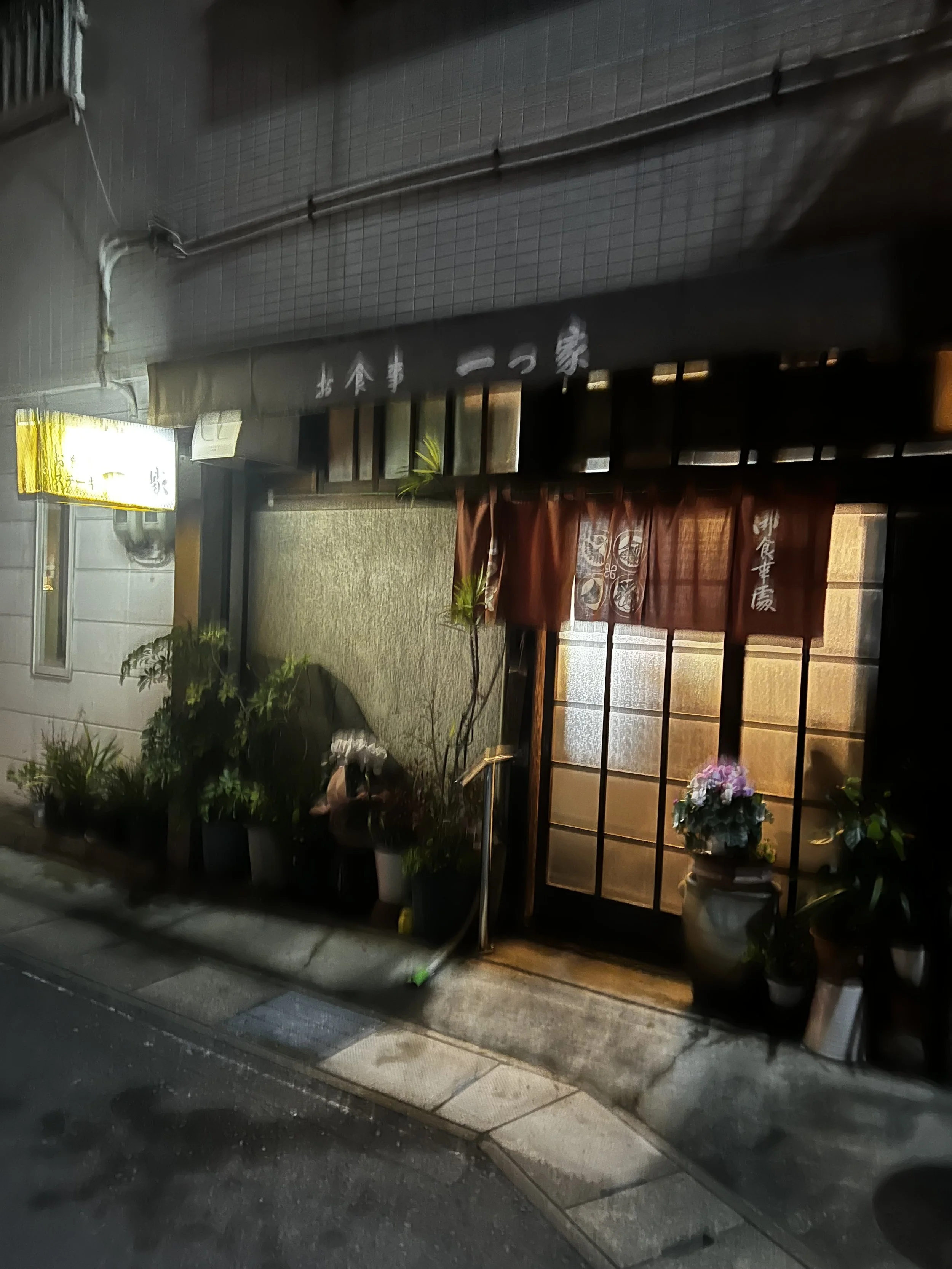
The deepest food experience happened in Kure at night. My husband booked a tiny izakaya run by one elderly woman. It felt like the world of Midnight Diner. No menu. Just a small blackboard that said your request, written vertically in handwriting that even Japanese people struggle to read.
We had no idea how to order. A regular customer next to us kindly helped. The style was simple. She already had dishes prepared, and you chose from what was there. Home style cooking. Squid simmered gently. Potato salad. Tamagoyaki. Fried eggs. Nimono vegetables. Nikujaga. Everything completely ordinary. Everything unbelievably good.
Yes, it was smoky. Yes, smoking was allowed. Yes, we even had our baby with us, happily rolling around on the tatami. It was intense, uncomfortable then comfortable, warm, kind, and deeply local. Even for us, it was hard to walk into a place like that.
This trip reminded me how many layers Japan still has. Even for Japanese people.
If you want to read the full story, including photos and all the details, check out the newsletter I will send soon.